

SDLC Security: Integrity Intelligence for Your Software Supply Chain
SDLC security now means defending the pipeline itself: package takeovers, CI/CD tampering, and SaaS abuse are how modern supply chain attacks begin.
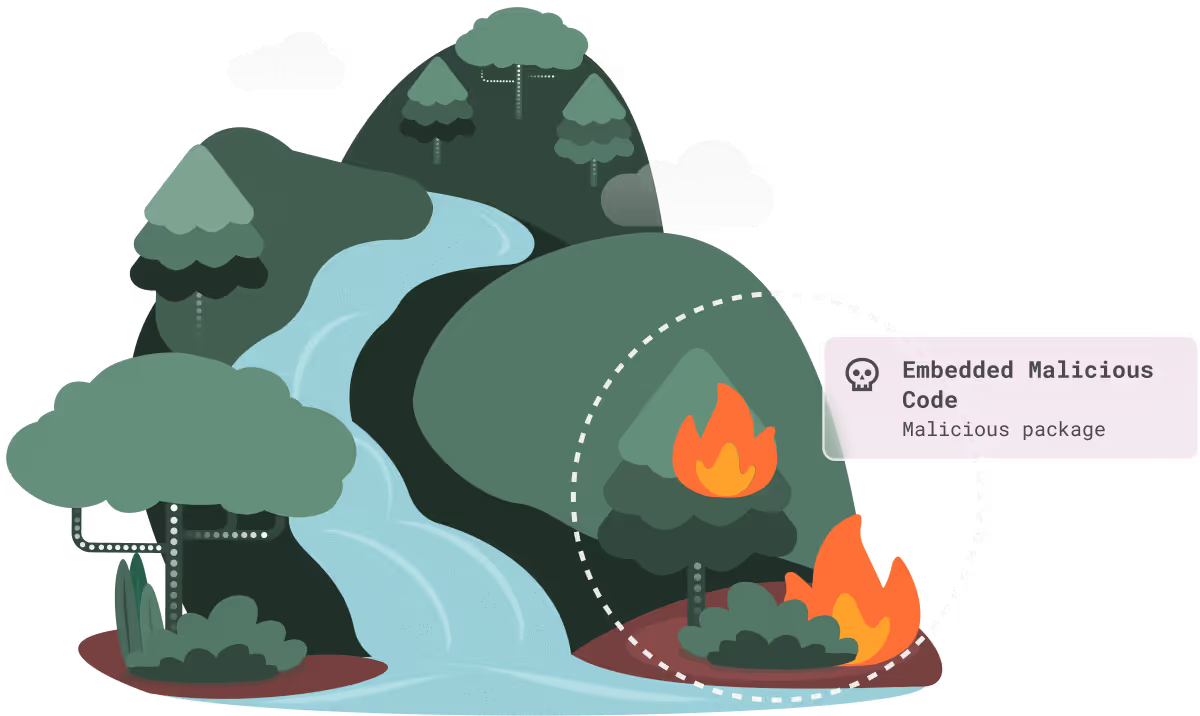

Why Traditional Scanners Miss SDLC and Pipeline Attacks
npm maintainer takeovers, GitHub access theft, and SaaS compromises are now common.
Traditional scanners miss developer toolchain and pipeline attacks.
How Kodem Secures Your SDLC Against Supply Chain Threats
Malicious Package detection
Package integrity validation to catch poisoned update.
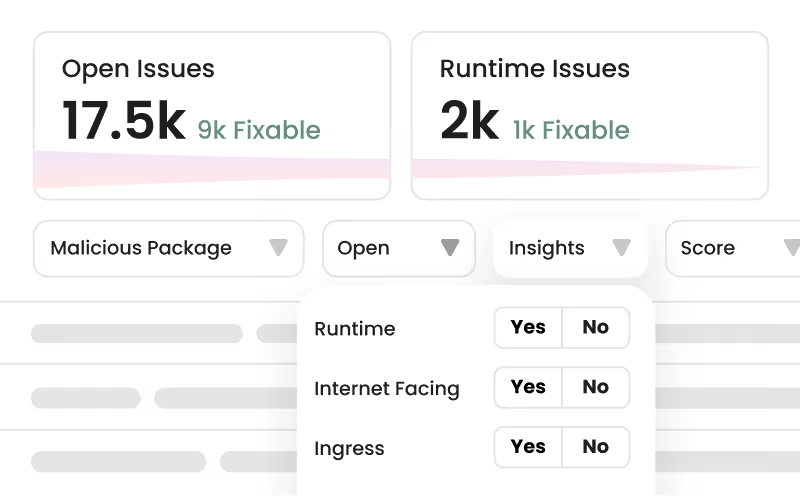
Malicious Package Detection and CI/CD Hardening
Prevents artifact tampering.
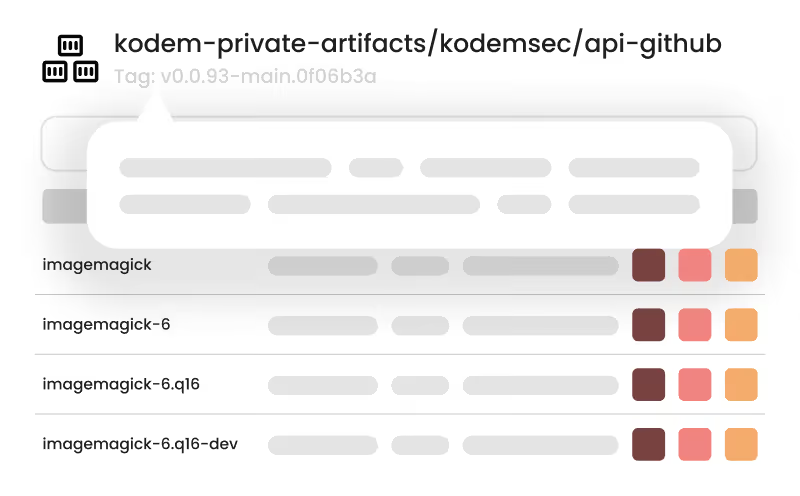
Monitoring for abnormal calls
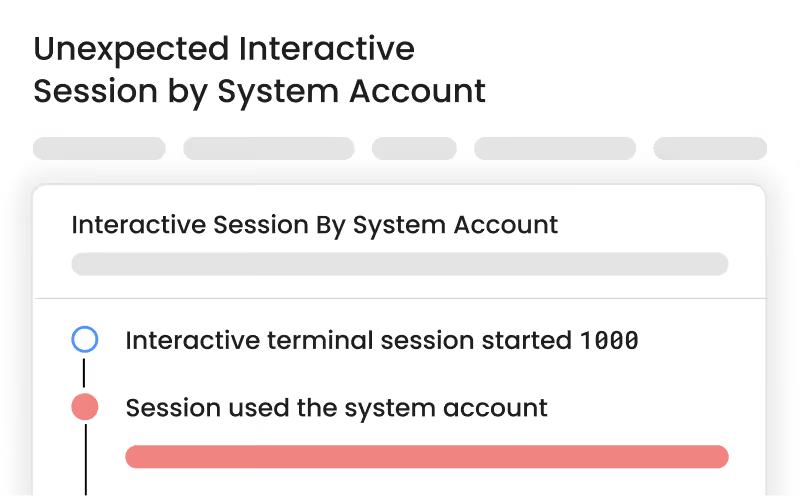
Exploit intelligence
To map to adversary TTPs.
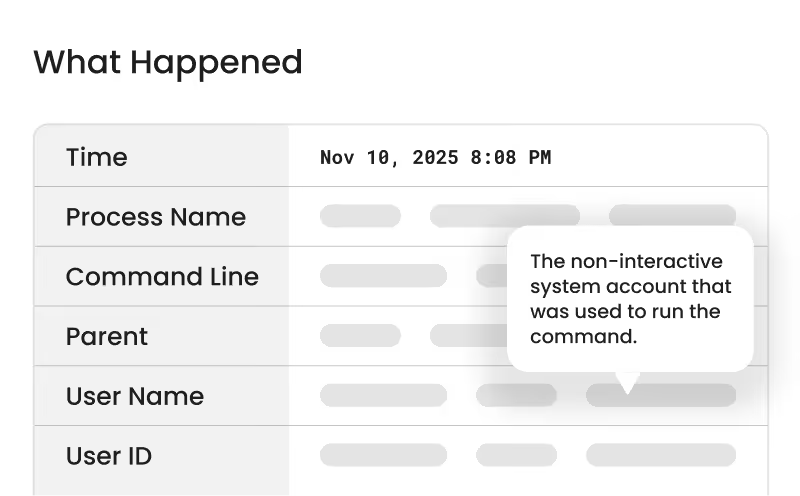
What is SDLC security?
SDLC security protects every stage of the software development lifecycle, from the code you write to the pipeline that ships it. Modern supply chain attacks now target the pipeline itself through package takeovers, CI/CD tampering, and abused SaaS integrations. Kodem validates integrity across your software supply chain, so a compromised dependency or build step is caught before it reaches production.
Trusted by








What is SDLC security?
SDLC security is the practice of building protection into every phase of the software development lifecycle, including design, coding, build, test, and deployment. Rather than scanning for bugs only at the end, it secures the pipeline, dependencies, and integrations that attackers increasingly target to reach production systems.
What are common SDLC and software supply chain attacks?
Frequent attacks include malicious or hijacked open source packages, tampering with CI/CD build steps, stolen pipeline credentials, and abuse of connected SaaS integrations. Each one lets an attacker inject code or gain access upstream, so the compromise spreads through every build that uses the affected component.
How is SDLC security different from traditional scanning?
Traditional scanners look for vulnerabilities inside your own code. SDLC security widens the lens to the integrity of the whole pipeline, asking whether your dependencies, build infrastructure, and automation can be trusted. That shift matters because many recent breaches never touched the application code itself.
What is software supply chain integrity?
Supply chain integrity means every component that enters your build is verified and unchanged, from third-party packages to the scripts that compile and deploy them. Kodem validates that integrity continuously, so a swapped dependency, a poisoned artifact, or an altered pipeline step is flagged before it ships.
How does Kodem secure CI/CD pipelines?
Kodem monitors the build and deployment pipeline for tampering, malicious packages, and unexpected changes, and connects those signals to runtime behavior. By correlating what enters the pipeline with what actually executes in production, it catches supply chain threats that static checks alone would miss.


SDLC security where a poisoned build step never reaches production
A malicious npm package update included a backdoor.
Kodem flagged unexpected runtime behavior and halted rollout before production impact.
“We eliminated risks our legacy tools never saw and prevented an attacker from moving downstream into production.”
Frequently Asked Questions
Kodem secures the software development lifecycle from code to runtime, governing what enters your repositories and pipelines with policy and adding integrity intelligence against supply-chain attacks like package takeover and CI/CD tampering.
What does securing the SDLC with Kodem cover?
The full lifecycle: dev, test, build, staging, and production, across open source, proprietary and AI-generated code, and containers. Kodem connects findings from code through runtime so risk is understood end to end.
How does Kodem govern the SDLC?
With two policy types: SCM policies that prevent issues from entering repositories as PR checks, and CI policies that validate container images before push. Actions are Block or Warn, with Kodem-unique conditions like whether an issue is confirmed in runtime and whether a fix exists.
How does Kodem help against supply-chain attacks?
Kodem detects malicious and compromised packages, surfaces shadow dependencies present at runtime but missing from manifests, and uses runtime evidence to show which components actually execute, which is where supply-chain compromise becomes real risk.
Where do governance checks run?
Across SCM (GitHub, GitLab, Azure Repos) as PR checks or comments, and in CI/CD before image push. A CI/CD option keeps scanning on-prem and uploads only results, preserving data sovereignty.