

Application Detection and Response That Beats Attackers to the Punch
Application detection and response tools exist because exploits land within hours while patches take weeks; Kodem detects live attacks and mitigates them in real time.
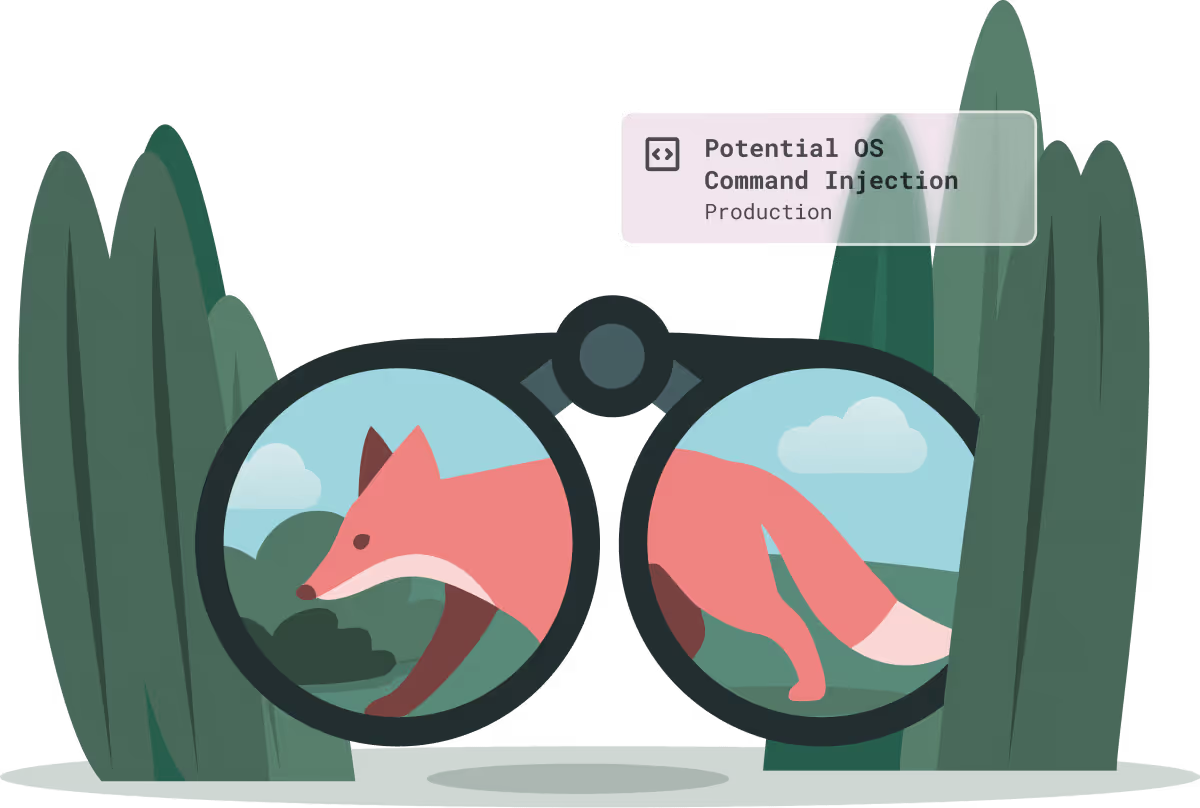

Why WAFs and RASP Fall Short Against Live Exploits
Exploits land within hours, patches take weeks.
WAFs lack context; RASP adds latency.
How Kodem ADR Detects and Blocks Attacks in Real Time
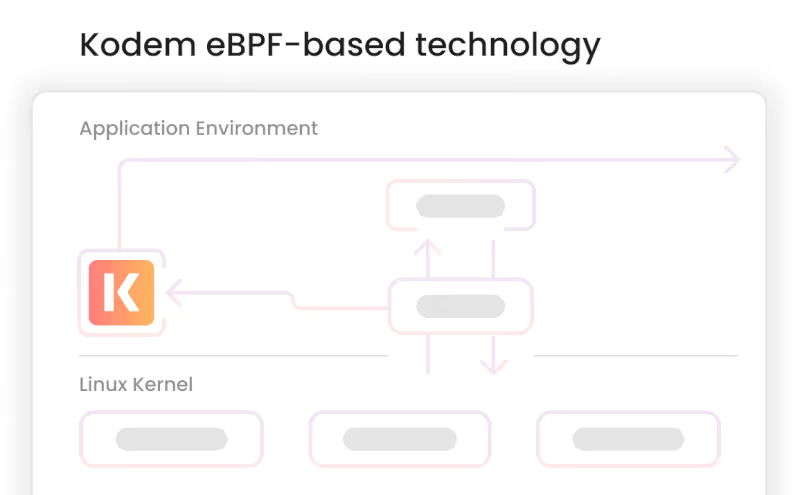
Continuous runtime detection
With eBPF and memory forensics
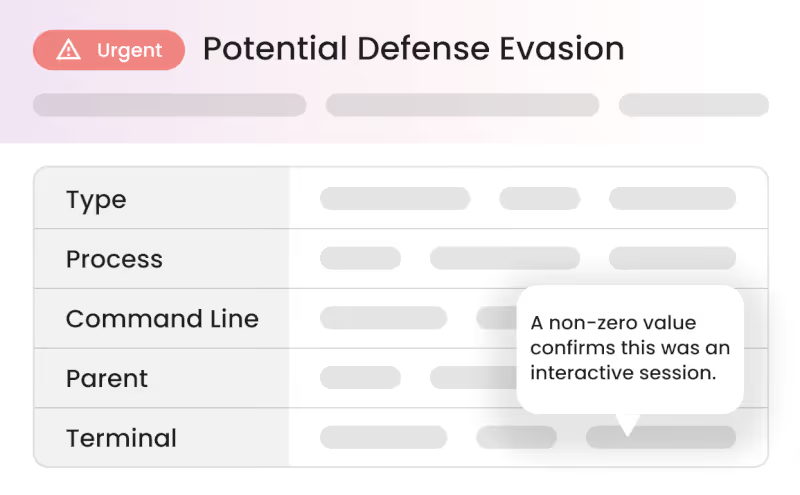
Exploit validation vs. benign traffic
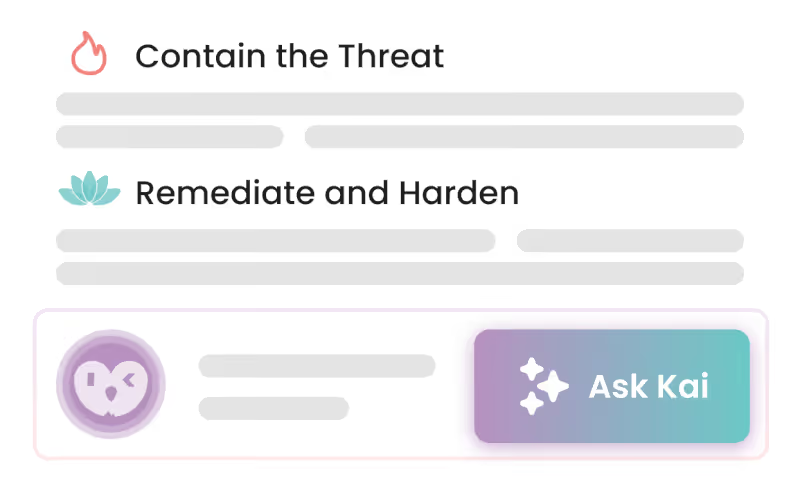
Auto-Generated WAF Rules and Runtime Guards
Lightweight sensors with no restart overhead

What are application detection and response tools?
Application detection and response (ADR) tools detect and stop attacks at the application layer while they are happening, not days later in a report. Exploits often land within hours, but patches can take weeks, which leaves a dangerous gap. Kodem ADR uses eBPF to watch live application behavior, identify active exploits, and auto-generate WAF rules that block the attack in real time.
Trusted by











What are application detection and response (ADR) tools?
Application detection and response tools monitor running applications for active attacks and respond in real time. Unlike scanners that find flaws before deployment, ADR focuses on production, detecting exploitation as it happens and applying mitigations, so an attacker is stopped during the window before a permanent patch is ready.
How are ADR tools different from WAFs and RASP?
Traditional WAFs filter traffic at the network edge using signatures, and RASP instruments the app but can add overhead. ADR works from deep runtime visibility into how the application actually executes, so it detects novel exploits that signature-based tools miss and responds with targeted, context-aware mitigations.
What is eBPF-based detection?
eBPF lets Kodem observe application and system behavior directly in the Linux kernel with very low overhead. That gives ADR a precise, real-time view of what code is executing and how an exploit is unfolding, without requiring changes to the application or heavy instrumentation.
Can ADR auto-generate WAF rules?
Yes. When Kodem ADR identifies a live exploit, it can automatically generate a corresponding WAF rule to block the attack pattern immediately. That turns a detection into a working mitigation in real time, which closes the gap between when an exploit appears and when a code fix is deployed.
When do you need application detection and response tools?
ADR matters most when exploits can reach production faster than your team can patch, which is now the norm. If you run cloud-native or Kubernetes applications and need to survive the window between disclosure and remediation, application detection and response gives you a real-time line of defense at the application layer.


Application detection and response tools that stop the exploit while it is happening
A Java deserialization zero-day was exploited in the wild.
Kodem detected the payload at runtime and auto-generated WAF rules to block it until patched.
"Kai saved our engineers time, 10x’d our team, and gave us visibility we never had."
