

AI Security Posture Management for Your Entire AI Stack
AI security posture management (AI-SPM) gives you one inventory and policy layer for every AI artifact: models, prompts, plugins, code editors, and vector databases.
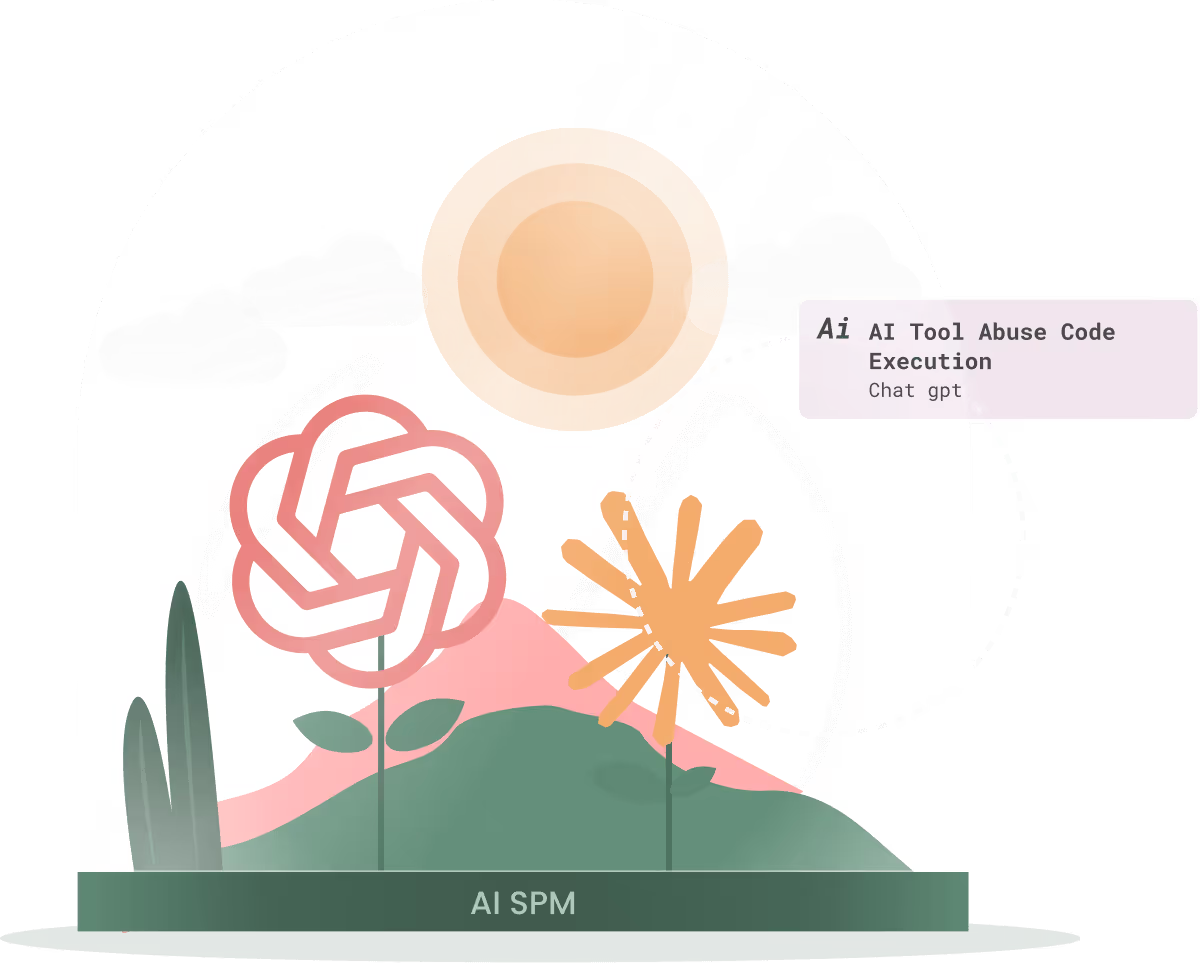

Why AI Applications Create Risks Legacy AppSec Tools Miss
AI apps face new risks: prompt injection, plugin abuse, vector DB leaks.
Missing signing, licensing, and provenance controls.
How AI-SPM Secures Models, Prompts, Plugins, and Data
Management
Posture management for all AI artifacts (models, code editors, prompts, plugins, DBs)

LLM and AI Code Editor vulnerability detection
Detects injections, RCEs, data leakage, and DoS
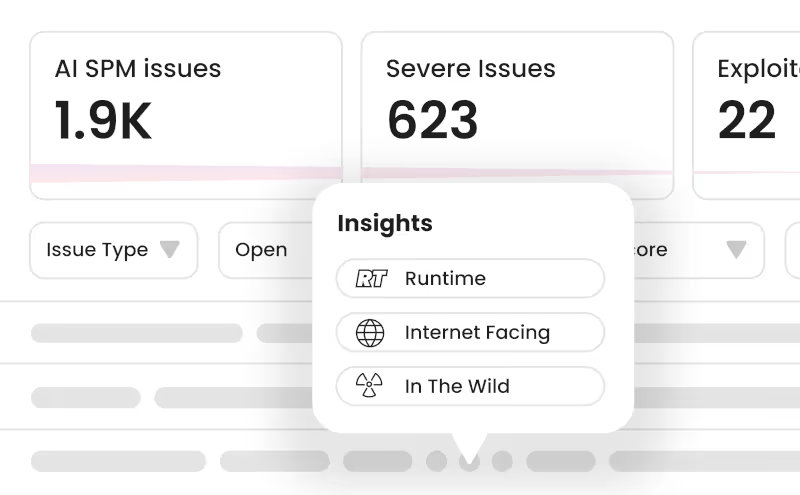
AI supply chain security
AI BOMs, signing, license checks, provenance
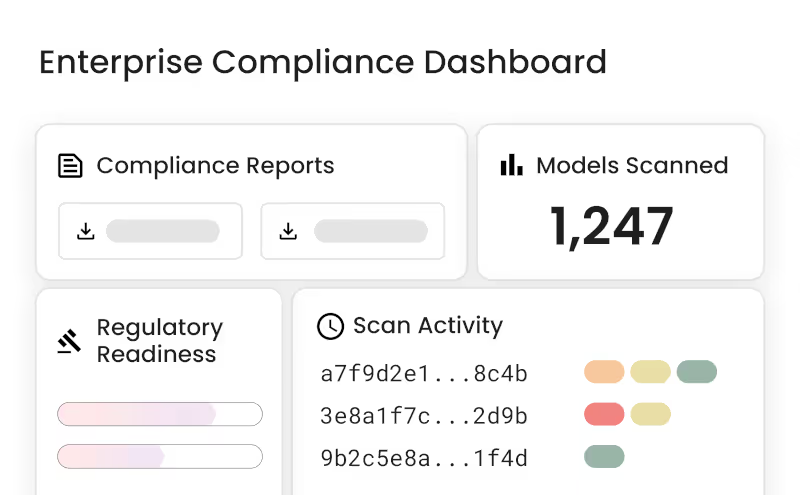
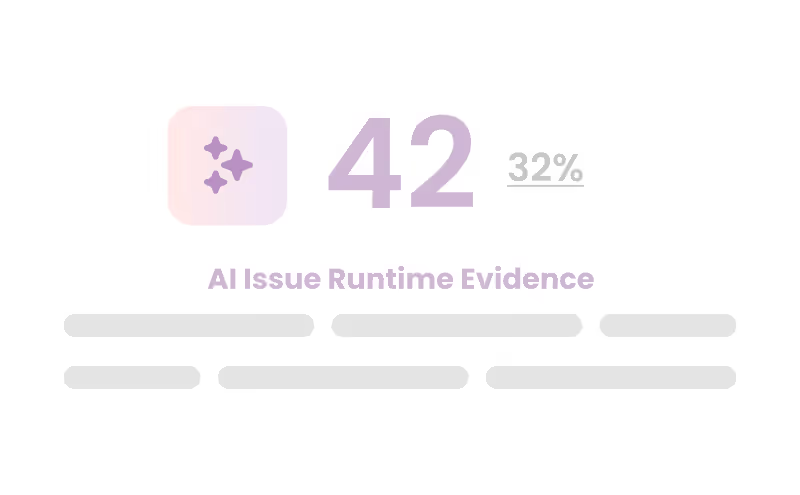
Runtime Validation for LLM and AI Agent Behavior
Confirmation of model-plugin call sequence
What is AI security posture management (AI-SPM)?
AI security posture management (AI-SPM) gives you a single inventory and policy layer for every part of your AI stack, including models, prompts, plugins, code assistants, and vector databases. AI applications introduce risks that legacy AppSec tools were never built to see. Kodem adds runtime validation, signing, licensing, and provenance to your AI artifacts, so you can govern how AI behaves in production.
Trusted by










What is AI security posture management (AI-SPM)?
AI security posture management, or AI-SPM, is the discipline of discovering, securing, and governing the components of an AI application. It provides one inventory and policy layer across models, prompts, plugins, datasets, and vector databases, so security teams can see and control AI risk the way they manage the rest of their stack.
What does AI-SPM actually protect?
AI-SPM covers the full AI application stack: foundation and fine-tuned models, prompts and prompt templates, plugins and tools, code assistants, training data, and vector databases. It tracks where each artifact came from, how it is used, and whether it meets your security and licensing policies.
How is AI-SPM different from traditional application security?
Traditional AppSec inspects source code and dependencies. AI-SPM adds the artifacts unique to AI systems, such as model weights, prompts, and embeddings, and the new attack surface they create. It pairs that inventory with runtime validation, because much of an AI system's risk only appears once the model is responding to live input.
What is runtime validation for LLM and AI agent behavior?
Runtime validation watches how models, agents, and plugins behave when they execute, not just how they are configured. It can flag unexpected tool calls, data access, or outputs in production, which is essential for AI systems whose behavior depends on prompts and context rather than fixed code paths.
Why do AI applications create risks legacy tools miss?
AI applications add non-deterministic models, external plugins, and large training datasets that classic scanners cannot reason about. Risks like prompt injection, unsafe tool use, model provenance gaps, and license violations live outside source code, so they require an AI-SPM approach built specifically for the AI stack.


AI security posture management that governs every model, prompt, and plugin you ship
A summarization model was integrated without a signature or license metadata.
Kodem generated an AI BOM, flagged missing provenance, and blocked deployment until validated.
"Kai saved our engineers time, 10x’d our team, and gave us visibility we never had."
