Automate Vulnerability Management: Neutralize Attack Chains, Not Alerts
To automate vulnerability management, you have to fix attack chains rather than individual CVEs; Kodem models real exploit paths and auto-applies mitigations across your environment.
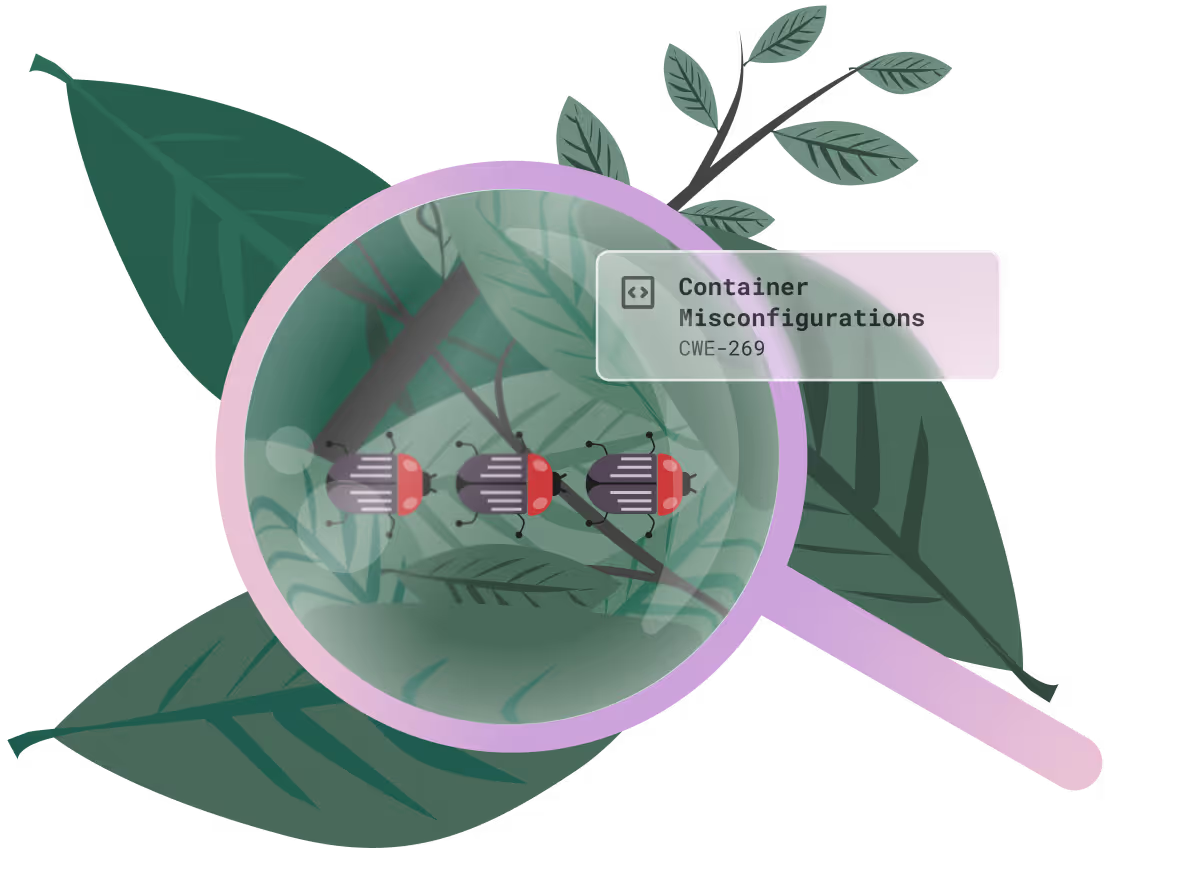

Why Siloed Findings Break Vulnerability Management
Findings remain siloed across code, containers, and cloud.
Patches aren’t always available, leaving open exposures.
How Kodem Automates Vulnerability Management End to End
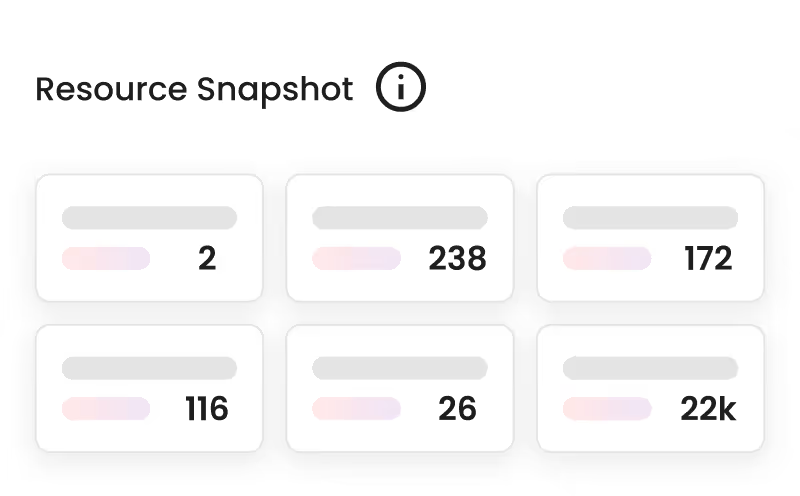
Full-stack inventory
Unified inventory across environments.
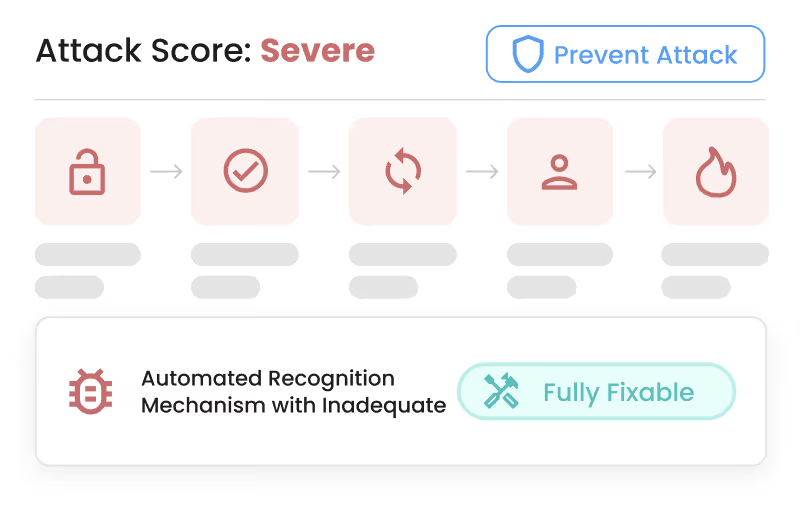
Attack chain modeling
Simulate attack chains to surface real exploit paths.
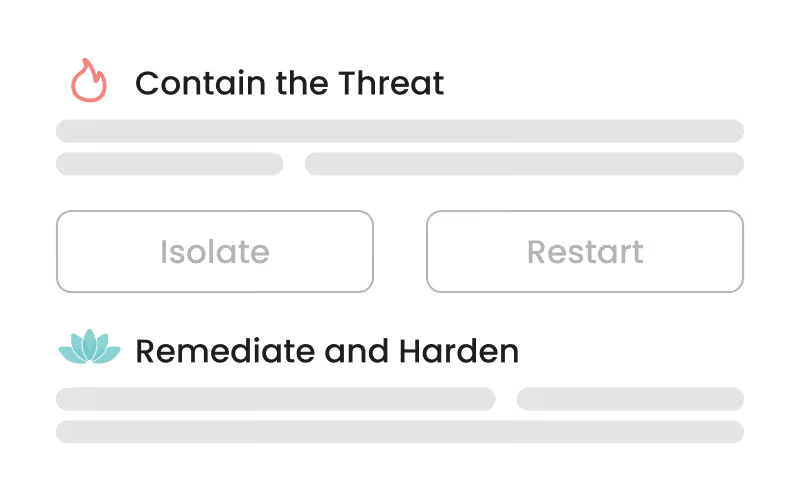
Virtual Patching When Vendor Fixes Lag
Auto-fix mitigations when patches lag.
Full-SDLC Governance
Enforce consistent policy from dev to prod.
What does it mean to automate vulnerability management?
To automate vulnerability management is to remove the manual triage between finding a vulnerability and fixing it. Instead of ranking isolated CVEs by severity score, Kodem models real attack chains, prioritizes the exposures attackers could actually exploit, and auto-applies mitigations like virtual patches. The result is faster remediation and far less time spent sorting alerts by hand.
Trusted by











What does it mean to automate vulnerability management?
Automating vulnerability management means using software to handle the work teams normally do by hand: correlating findings, prioritizing by real risk, and applying or recommending fixes. Done well, it shrinks the gap between discovery and remediation from weeks to hours, because exploitable issues no longer wait in a manual triage queue.
Why is manual vulnerability management broken?
Manual programs drown teams in findings from siloed scanners, each ranked by a generic severity score with no view of exploitability. Engineers then spend most of their time deciding what to ignore. That backlog is why remediation often stretches for months while the genuinely dangerous exposures sit unaddressed.
What is attack chain modeling?
Attack chain modeling maps how separate weaknesses combine into a real exploit path, rather than scoring each vulnerability alone. By focusing on the chains an attacker could actually follow, Kodem prioritizes the small number of fixes that break those paths, instead of asking teams to patch every CVE equally.
What is virtual patching?
Virtual patching applies a runtime mitigation that blocks exploitation of a vulnerability before the official vendor fix is available or deployed. It buys time when a patch lags, keeping the exposure from being exploited while the permanent fix moves through testing and release.
How does automation reduce time to remediate?
Automation removes the slow steps: it deduplicates findings, prioritizes by exploitability, routes issues to the right owner, and can apply mitigations or generate fixes directly. By replacing manual triage with attack-chain-based decisions, Kodem turns a months-long remediation cycle into a continuous, largely hands-off process.


Automate vulnerability management so the dangerous exposure fixes itself first
An Alpine image with a privilege escalation bug had no patch available.
Kodem generated a fix by removing setuid and adjusting capabilities until the vendor released a patch.
"No other tool showed us how low-severity vulns could be chained into a breach. Kodem did."