

Secrets Detection on Auto-Pilot
Secrets detection has to cover more than your repos: Kodem prevents, detects, and revokes exposed credentials across code, configs, CI pipelines, and runtime.
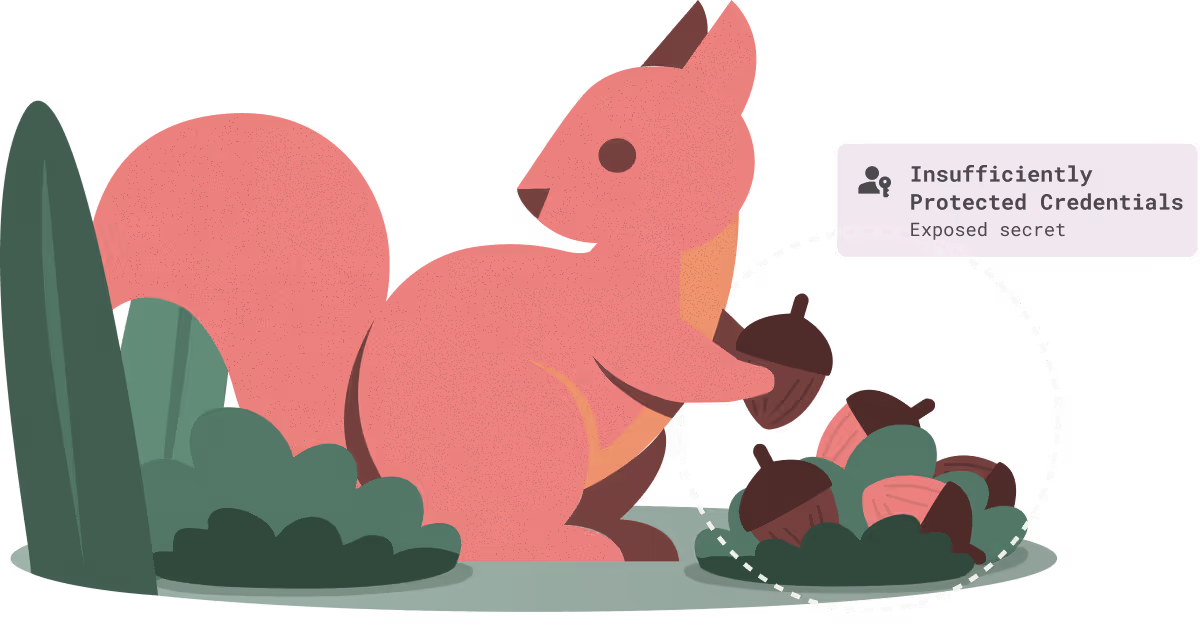

Why Exposed Secrets Survive in Commits, Logs, and Images
Secret Scanning in CI: Block Merges Before Leaks Ship
Tokens remain valid long after they’re removed from repos.
How Kodem Detects and Revokes Exposed Secrets Across the SDLC
Full SDLC Detection
Detect secrets and hard coded credentials in Dev, Test and Prod
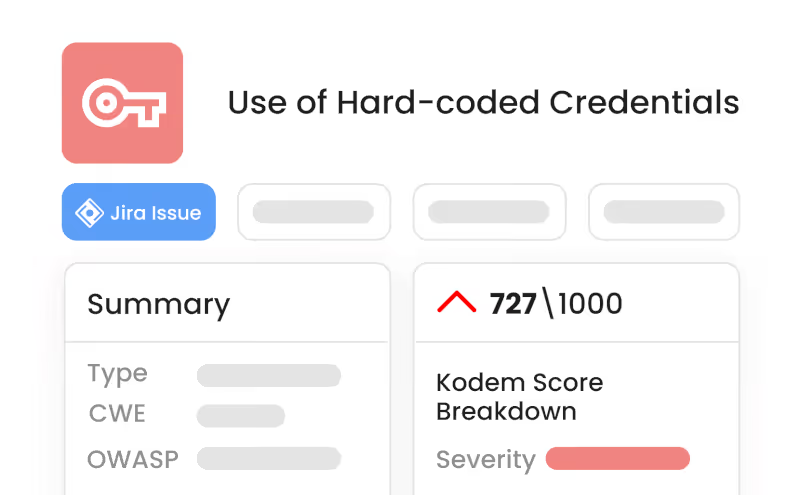
Stop builds with exposed secrets
Pre-commit and PR scanning to block merges.
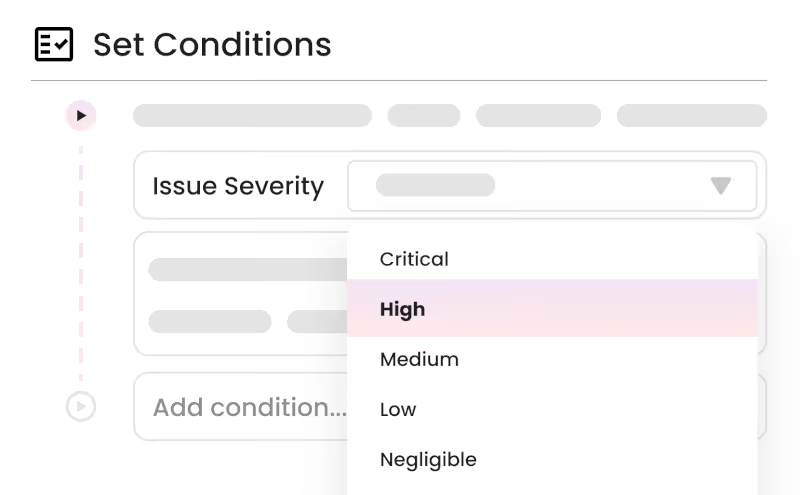
Robust audit trails
Historical scanning of Git repos and container images.
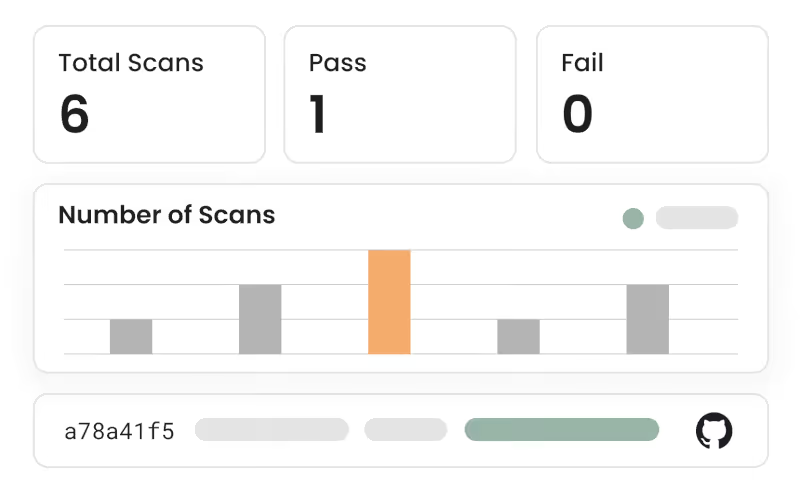
Auto-generated fix
Choose AI generated code fixes. Never modifies your repo or uses code for training.
What is secrets detection?
Secrets detection is the process of finding exposed credentials, such as API keys, tokens, passwords, and certificates, before attackers can use them. Secrets leak far beyond source code, surfacing in config files, CI/CD pipelines, container images, and logs. Kodem detects exposed secrets across the full SDLC, blocks risky merges, and helps revoke compromised credentials before a token is abused.
Trusted by











What is secrets detection?
Secrets detection is the practice of scanning code, configuration, pipelines, and runtime for exposed credentials like API keys, access tokens, database passwords, and private certificates. The goal is to find and revoke leaked secrets before an attacker uses them to reach your systems or data.
Where do exposed secrets usually hide?
Secrets leak well beyond source files. They commonly appear in commit history, environment variables, CI/CD configuration, container image layers, and application logs. Because a single committed key can persist across forks and backups, secrets detection has to cover the whole software development lifecycle, not just your active repositories.
How does Kodem stop secrets from leaking in the first place?
Kodem scans for exposed credentials during development and can block merges that introduce a new secret, so the leak never ships to production. Catching credentials at the pull request stage is far cheaper than rotating keys after they reach a public repository or image.
What happens after Kodem detects an exposed secret?
When a credential is found, Kodem surfaces where it lives, flags its severity, and supports revocation and rotation so the exposed key can be invalidated quickly. It can also generate AI fixes, which shortens the window between detection and a fully remediated secret.
Does secrets detection cover CI and runtime, not just code?
Yes. Kodem inspects code, configuration, CI/CD pipelines, and runtime, so credentials injected at build time or surfaced in a running container are caught too. That broad coverage matters because many breaches start with a secret that was never present in the source repository.


Secrets detection that catches a leaked key before it ever ships
An AWS key was committed in a PR.
Kodem blocked the merge and automatically revoked and rotated the credential across the environment.
"No other tool showed us how low-severity issues could escalate into real production impact. Kodem caught it in time."
