

AI Code Security Platform
Accurate, automated code security with runtime validation
A code security platform only earns developer trust when its findings are real: Kodem pairs AI-assisted static analysis with runtime validation to eliminate false positives.
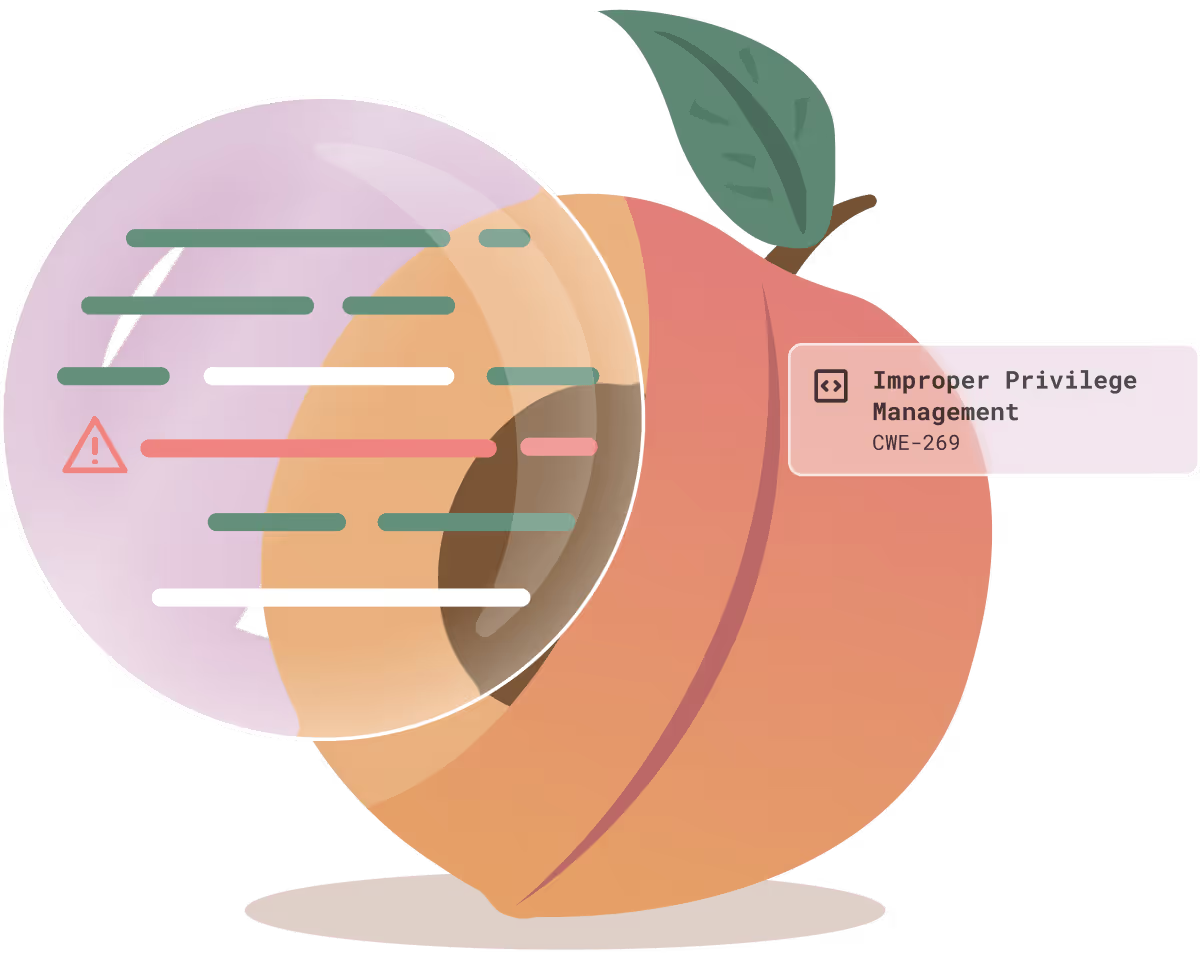

Why Static Scanners Flood Developers With False Positives
Static scanners generate noise without context.
Developers lose trust as real flaws get buried under false positives.
How Runtime Validation Makes Code Security Accurate
AI-Assisted Code Reviews and Auto-Generated Fixes
Code reviews by Kai highlight false positives.
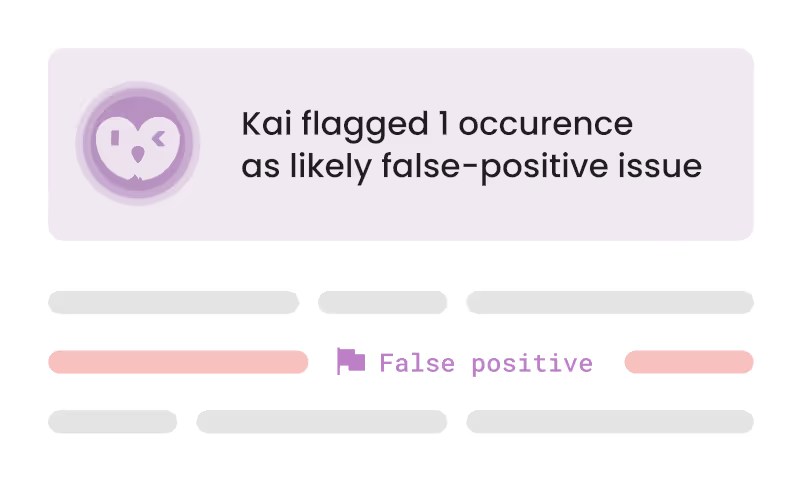
Auto-generated Fix
Choose AI generated code fixes. Never modifies your repo or uses code for training.
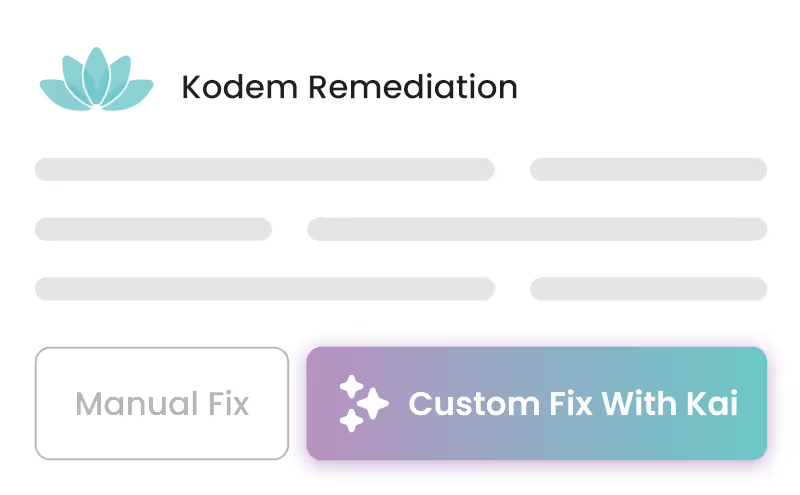
Runtime & Exploit Validation
False positive reduction by confirming runtime usage and exploitability.
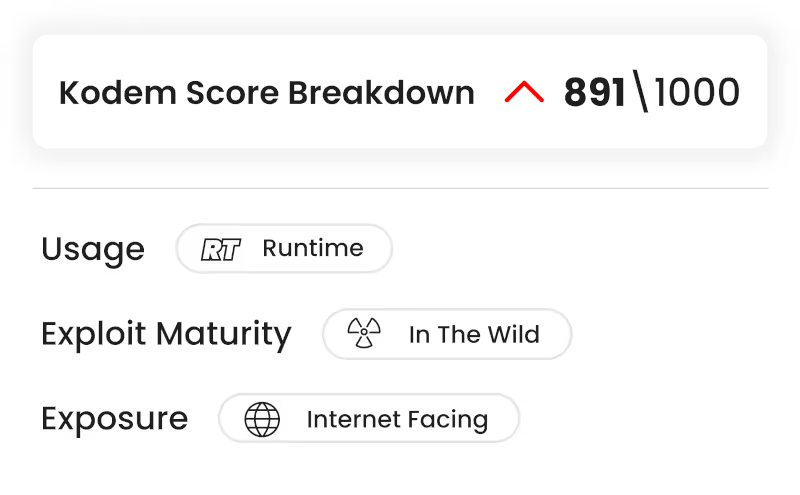
Developer first workflows
Developer-native integration into PRs, IDEs, and CI/CD

Trusted by











What is an AI code security platform?
An AI code security platform uses AI to analyze source code for security flaws and then validates those findings against how the code actually runs. The combination of AI-assisted static analysis and runtime context produces far fewer false positives than a standalone SAST tool, so developers can trust and act on the results.
How does runtime validation reduce false positives?
Static analysis flags any code path that could be vulnerable in theory. Runtime validation checks whether that path is actually loaded and executed, which lets Kodem suppress findings in code that never runs. The result is a short, accurate list of exploitable issues instead of thousands of low-confidence alerts.
How is this different from traditional SAST?
Traditional SAST scans code in isolation and tends to over-report, leaving teams to triage noise by hand. An AI code security platform adds runtime evidence and AI reasoning, so each finding comes with context on whether it is reachable and why it matters, which makes remediation faster and more reliable.
Does Kodem integrate into the IDE and CI/CD?
Yes. Kodem fits into the developer workflow directly in the IDE and across CI/CD pipelines, so flaws are surfaced as code is written and again before it ships. Catching issues early, with runtime-validated accuracy, keeps security from becoming a late-stage bottleneck.
Can Kodem auto-generate fixes and AI code reviews?
Yes. Beyond detection, Kodem can generate suggested fixes and AI-assisted code reviews for the flaws it confirms. That shortens the path from a validated finding to a merged remediation, which is where most of the time in code security is usually lost.


An AI code security platform where every finding is one developers will actually fix
A scanner flagged command injection in a logging function.
Kodem traced runtime paths and confirmed it never received untrusted input, suppressing the alert.
"Kai saved our engineers time, 10x’d our team, and gave us visibility we never had."

What is Runtime SAST?
Runtime SAST is static application security testing that is checked against what your code actually does in production. It scans source code for weaknesses like injection, insecure deserialization, and weak cryptography, then correlates each finding with runtime execution evidence to confirm which vulnerable code paths are genuinely reachable and exploitable.
Traditional SAST reports every theoretical weakness, which buries developers in findings that never run. Kodem keeps that broad source-code coverage and adds runtime intelligence: it confirms whether a vulnerable function is loaded, executed, and reachable before it asks anyone to fix it. Teams get a smaller, higher-trust queue where the work maps to real exploitability instead of pattern matches.